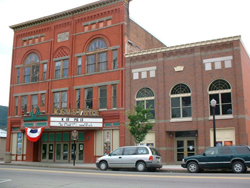
 From its opening in 1886, the Keystone Theater has been the entertainment center of Bradford County. Originally named Hale’s Opera House, the theater hosted John Philip Sousa and was one of the first purveyors of silent films when they added projection facilities in 1913. But time has not been kind to the Keystone. When the repairs got to be too much for the original owners in the 1970s, they sold it. It was eventually bought by the Bradford County Regional Arts Council and has since gone through two major renovations; one in 1988, another in 2001.
Today, the theater hosts first-run movies, live performances and neighborhood artist workshops, working its way back to being the neighborhood hub it once was. This process took another step forward this week, as the Keystone received a USDA Rural Enterprise Development grant and a series of local funds to begin two renovation projects. Part of the funding will go for basic structural improvements and re-securing the facade but the rest will create a brick plaza that will allow local citizens to own a piece of their entertainment capital.
“USDA’s Rural Business Enterprise Grants are a great source of funding that can be the difference in getting projects accomplished that might not otherwise,” says USDA State Director of Rural Development Tom Williams. “This funding will allow for continued restoration of a historic relic in this small town.”
The USDA Rural Enterprise Grants have been an integral partner for PA’s rural communities, investing over $700 million last year. And while many of this year’s projects–from a Community Kitchen for food entrepreneurs in the Lehigh Valley to an energy efficient farm in Lancaster–center around food and health, USDA stands behind the Keystone as a way to support the local economy and strengthen yet another rural Pennsylvania town.
“The arts play an important role in building strong communities and employing local residents while improving small town economies,” says Williams. “The theater is a functional landmark in the community and we want it to stay that way.”
Source: Tom Williams, USDA
Writer: John Steele